Health Insurance and Health-Seeking Behaviour: The Distributional Effects of Public Health Insurance in Nepal
Working Paper
The first causal evaluation of Nepal's National Health Insurance Programme. Eligibility raises health-facility visits by 14 percent, but the gains appear only in low-poverty districts, pointing to a supply-side constraint on the empanelled-facility network.
- Design
- Staggered difference-in-differences (Callaway and Sant'Anna)
- Data
- District-quarter panel of all health-facility visits, with NHIP registration and claims records
- Setting
- Nepal, all 77 districts, 2016 to 2022
Key Findings
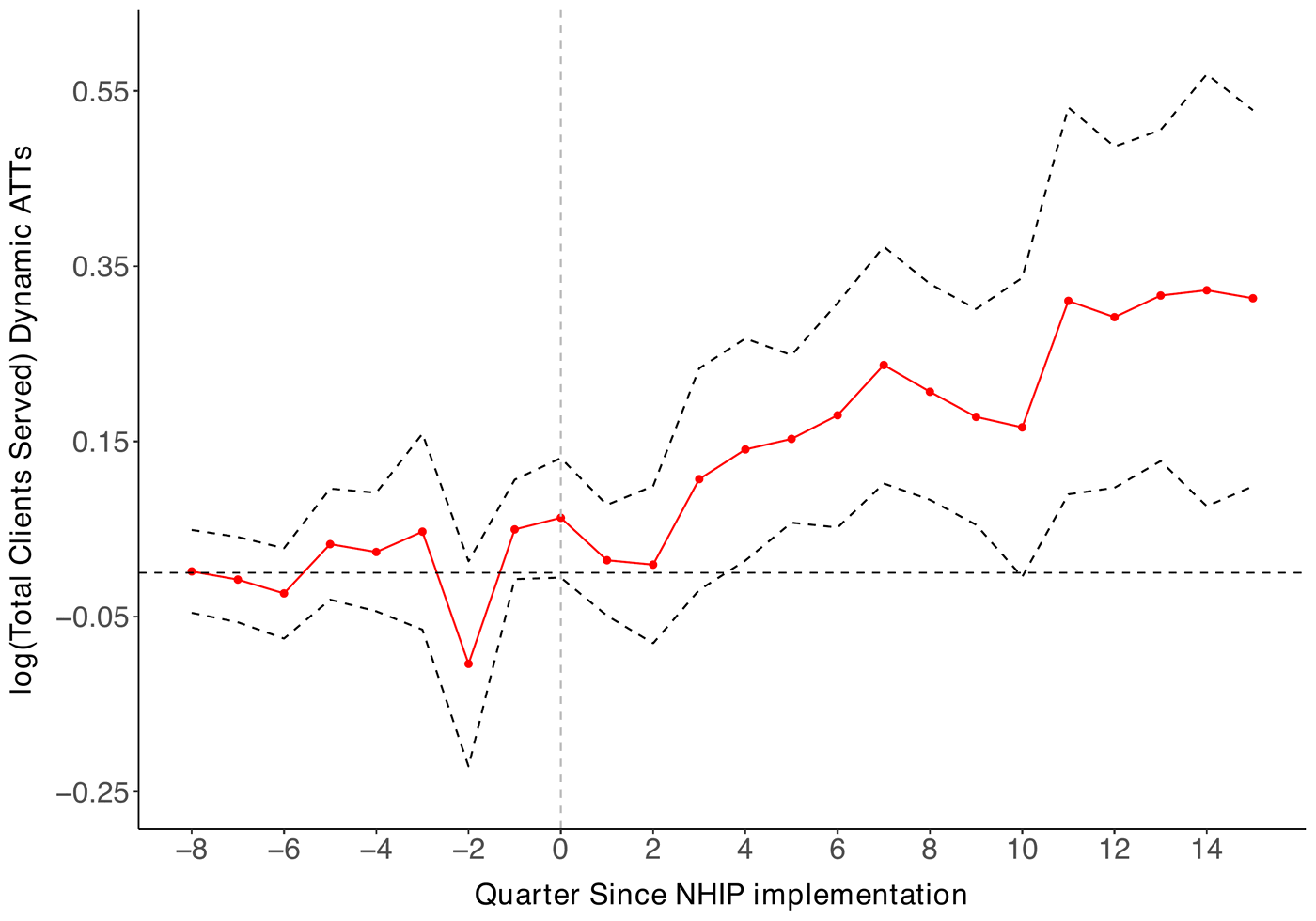
- NHIP eligibility raises total health-facility visits by 14 percent, with similar gains across outpatient, emergency, and diagnostic margins.
- Effects emerge gradually and remain at their peak level once reached.
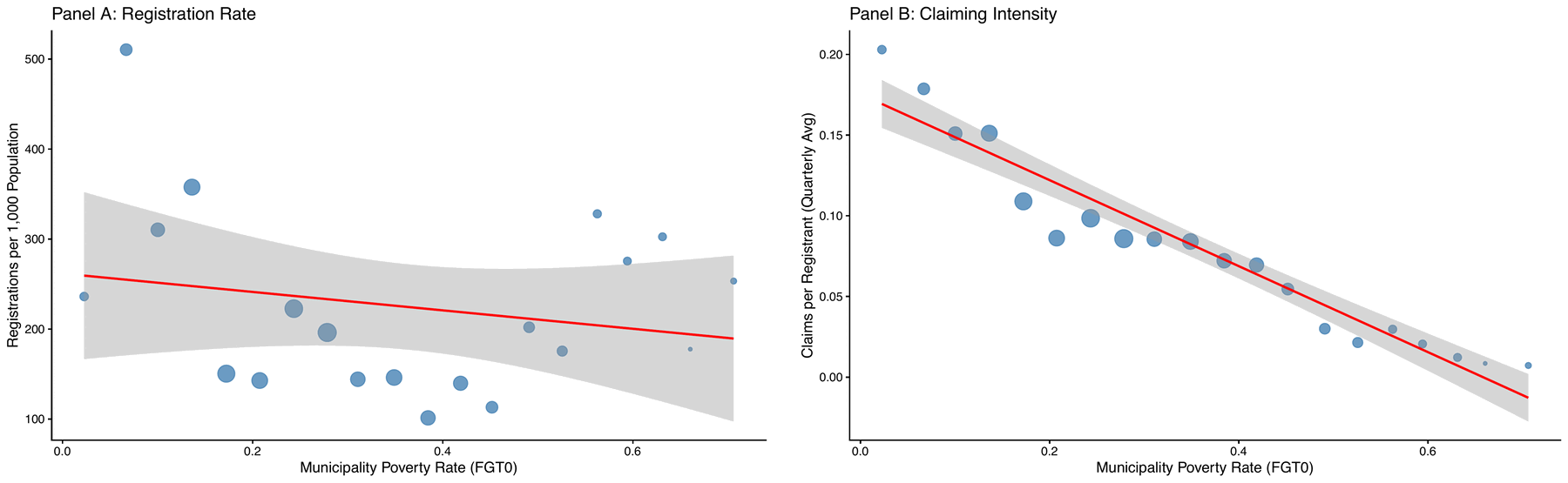
- The gains are unequally distributed: utilisation rises only in low-poverty districts, while high-poverty districts show no significant effect.
- A 2019 facility-reassignment reform points to a supply-side explanation: in poor districts the empanelled-facility network is too sparse for coverage to translate into care.