Adverse Selection in (Un)Subsidised Health Insurance: Evidence from Nepal’s Age-70 Threshold
Job Market Paper · Working Paper
Nepal waives health insurance premiums at age 70. I use that statutory waiver in a regression discontinuity design to produce the first quasi-experimental estimate of adverse selection in a national insurance scheme in a low- or middle-income country.
- Design
- Regression discontinuity in age at enrolment
- Data
- Administrative claims records from Nepal's National Health Insurance Programme
- Setting
- Nepal
Key Findings
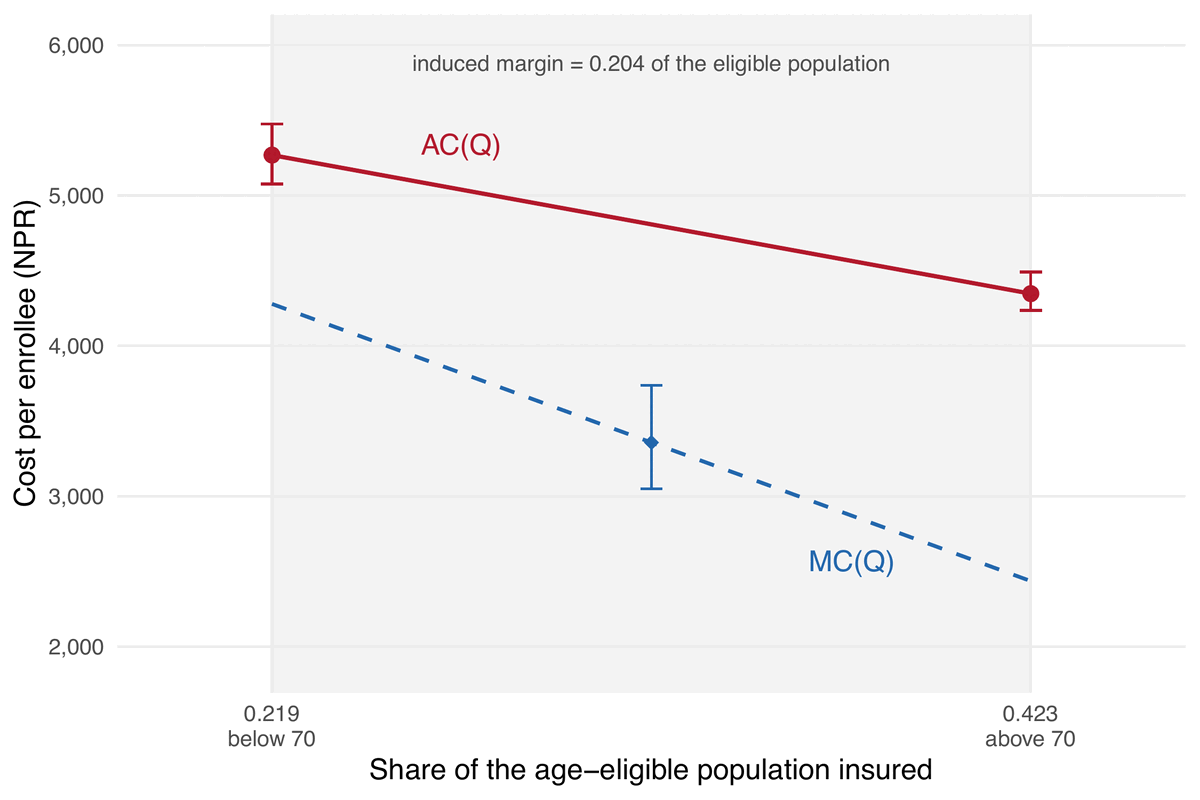
- Coverage nearly doubles at the age-70 premium waiver, from 21.9 to 42.3 percent of the age-eligible population, and the waiver extends coverage into places that are poorer and farther from care.
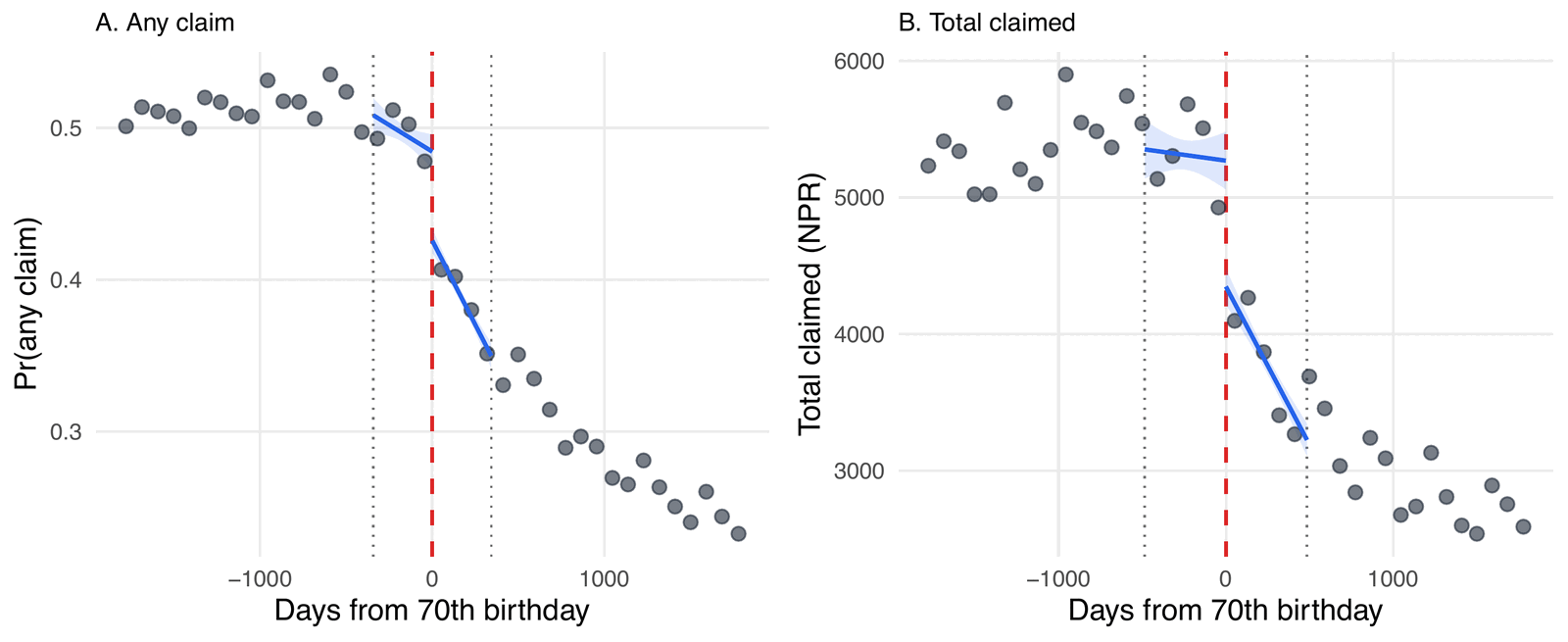
- Cost per enrollee falls across every claims margin at the threshold.
- The marginal cost of the enrollees the zero price draws in sits significantly below the average cost of the paying pool, which is adverse selection into the paid programme.
- Selection persisted while household bundling and restricted enrolment windows, the two remedies usually proposed against it, were both in force.